People

Faculty

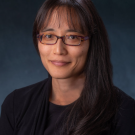
Yuko Munakata

Yuko Munakata is an elected fellow of the Association for Psychological Science and the American Psychological Association. Her work on child development has been funded by the National Institutes of Health since 1998, and has been published in top scientific journals and featured in The Atlantic, The Today Show, and Parents Magazine. Dr. Munakata co-edited two books on brain and cognitive development, and co-authored two editions of a textbook on computational cognitive neuroscience. She served as Associate Editor of Psychological Review, and has received awards for her research, teaching, and mentoring. She received her B.A. in Psychology and BS in Symbolic Systems from Stanford University. After earning her Ph.D. in Psychology from Carnegie Mellon University and the Center for the Neural Basis of Cognition (CNBC), she conducted postdoctoral research at the Massachusetts Institute of Technology in Brain and Cognitive Sciences. She was an Assistant and Associate Professor at the University of Denver and Associate Professor and Professor at the University of Colorado Boulder before moving to UC Davis.

Project Scientist

Jesse Niebaum

Jesse studies how children’s environments and learning histories influence their decisions to engage (or not engage) executive function, with the goal of better understanding how to support children’s executive functioning as they grow up. Prior to (re-)joining the lab, Jesse taught at Lewis & Clark College in Portland, OR. He completed a PhD in Developmental Psychology at UC-Davis, as well as an MA in Cognitive Psychology at the University of Colorado Boulder and a BA in Literature at the University of Kansas. His work has been funded by the National Institutes of Health, National Science Foundation, and the Dutch Research Council (NWO).

Graduate Student

Diego Placido

  • 7th year; Developmental Psychology, Quantitative Psychology, Computational Social Science Designated Emphasis
In his research, Diego applies a multi-modal approach that includes behavioral, pupillometry, EEG, and computational neural network modeling measures to investigate the role of early life experiences—particularly unpredictable family dynamics—on adaptive behavior engagement in response to environmental demands, and to probe the neural mechanisms underlying flexible cognitive control. Prior to joining the lab, Diego graduated from Brandeis University in 2015. He then continued research at Brown University until 2019 to study the development of executive functions and visual attention in children and adolescents. Outside of the lab, Diego enjoys weight-lifting, rock climbing, pickleball, and Brazilian jiu jitsu.

Rachel Foster

  • 4th year, Psychology
Rachel joined the lab as a graduate student in 2022. Her research focuses on the developmental interactions of learning and cognitive control. She is currently studying how sociocultural environments influence the development of cognitive control and self-control through the formation of habits, and the relative contributions of habits and effortful strategies to adaptive behavior across development. Prior to joining the lab, Rachel completed her B.S. in Cognitive Neuroscience at Brown University and a fellowship in Developmental Psychopathology and Social Neuroscience at Yale School of Medicine. Outside of the lab, you can find Rachel enjoying the California sun, learning new water sports, or exploring new cities through their coffee shops!

Tzu-Ching Lin

  • 3rd year, Psychology
Tzu-Ching joined the Cognition in Context Lab as a graduate student in 2023. She received her B.S. in Psychology from National Cheng Kung University, and was the Lab Manager at the National Taiwan Normal University where she studied the development of executive function across childhood through adolescence. Her research interests include the relationships among executive functions, academic performance, and the willingness to engage cognitive control. Outside the lab, she enjoys listening to music, reading, and is excited to explore the U.S!

Research Assistant

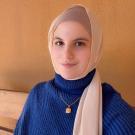
Alaa Al Dulaimi

Alaa joined the lab in January 2025 and is currently pursuing a B.S. in Human Biology. She is particularly interested in how early-life behaviors and developmental experiences influence long-term health outcomes and behavioral patterns in later life. She hopes to explore how early behaviors predict psychological development. Outside the lab, she enjoys hiking, baking, and exploring the outdoors, especially caves, national parks, and hidden nature spots.

Rosanna Chen

Rosanna joined the lab in fall 2025 and is currently pursuing a degree in Psychology with an emphasis in biology. She joined the lab after working with children and seeing how their executive function changes with age. She is interested in learning cognitive neuroscience and how it develops as children grow up. Outside of the lab, she enjoys hanging out with friends and reading.

Parnita Chowtoori

Parnita joined the lab in winter 2024 and is a 1st year Computer Engineering student at UC Davis. She works with Rachel to assist with current research in the lab while pursuing her own research as an ASPIRE scholar. She is interested in applying neuroscience principles to computer hardware design and engineering to advance technology. Beyond lab work and coursework, she enjoys working out and exploring new places in her free time.

Christopher De La Cruz

Christopher joined the lab in the spring of 2025 and is pursuing a Bachelor of Arts in Psychology at UC Davis. He is interested in cognitive and clinical development, with a particular focus on how mental health resources can be made more accessible to low-income communities. He hopes to increase awareness and reduce stigma around conditions like autism by contributing to research that supports earlier diagnosis and more equitable care. Christopher plans to attend graduate school in psychology and is passionate about using research to bridge the gap between science and community support. Outside of academics, he enjoys working out, listening to music, and spending time with friends and family.